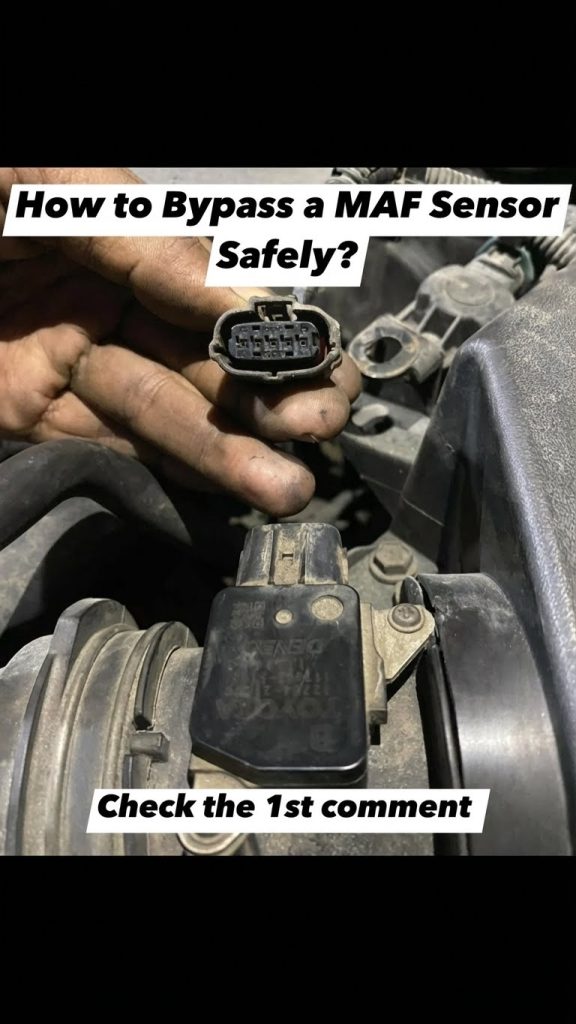

Bypassing a Mass Air Flow (MAF) sensor—a device that measures air entering an engine—is often discussed among DIY mechanics troubleshooting rough idle, hesitation, or fuel trim issues. This forces the engine into speed-density backup mode, where it estimates airflow rather than measuring it. While it helps isolate airflow problems, it’s not a long-term fix. Modern engines need precise MAF data for fuel delivery, ignition timing, and emissions control. Substituting this data disrupts accurate engine management.
Before diving in, this guide explains why people attempt to bypass the MAF, the effects on engine performance, and the safest approach for troubleshooting. Understanding the MAF’s role is key, whether you’re diagnosing issues or tuning for performance.
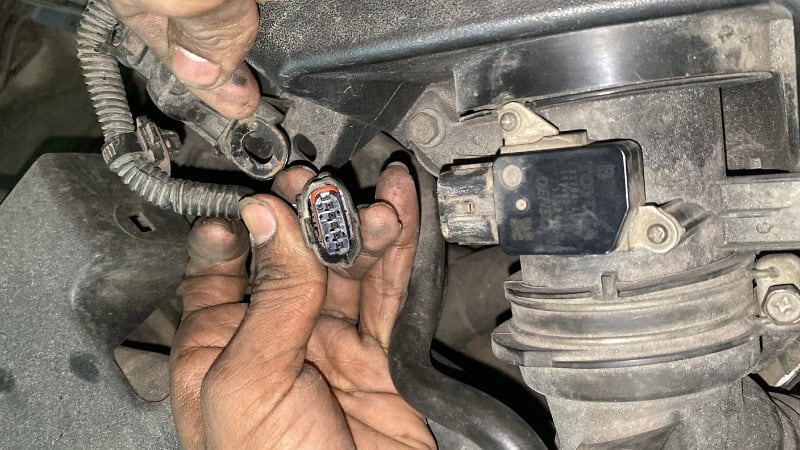
What a MAF Sensor Actually Does
The Mass Air Flow (MAF) sensor is essential on modern fuel-injected engines. Its main job is to measure precisely how much air is entering the engine so the powertrain control module (PCM)—the onboard computer that manages how the engine operates—can calculate how much fuel to add for efficient combustion. Additionally, the MAF reading helps the PCM adjust ignition timing (the precise moment the spark plug fires in each cylinder) and manage idle stability (keeping the engine running smoothly at low speed), ensuring the engine runs smoothly under all conditions.
Many MAF sensors use a hot-wire design, measuring the electrical current required to maintain a thin wire at a set temperature as air flows over it. When more air moves past the wire, more electrical current is needed to keep it hot. The sensor translates this change in current into a signal that the PCM can process as airflow data.
The MAF works together with other sensors. The Manifold Absolute Pressure (MAP) sensor measures air pressure in the intake manifold. The throttle position sensor (TPS) tracks the position of the gas pedal. The intake air temperature (IAT) sensor measures the temperature of the incoming air. O2 (oxygen) sensors measure oxygen levels in the exhaust gases. If any of these signals are off, the PCM cannot properly balance the air-fuel mixture.
If the MAF becomes inaccurate because of dirt, vacuum leaks, or electrical issues, the fuel system destabilizes. That leads to rough idle, hesitation, poor fuel economy, or black smoke—common moments when people try to bypass the MAF for diagnosis.
Why People Try to Bypass the MAF Sensor
Bypassing the MAF is a diagnostic step—not usually done casually. When an engine runs poorly, unplugging it helps identify if that’s the issue. Most vehicles switch to speed-density mode, making this helpful for troubleshooting, but it’s not a permanent solution.